Case Study by sea safe advocate Michael O’Brien
Michael O’Brien has spent decades working in the commercial seafood industry in the Northern Australia and Northen Territory, managing large trawlers that operate year-round in some of the country’s most challenging conditions. He has seen firsthand that serious incidents at sea rarely result from a single failure. More often, they occur when confusion and environmental factors combine in ways that overwhelm even experienced crews. As a result, Michael’s approach to safety controls focuses on preventing incidents, while also improving survival outcomes for when things go wrong.
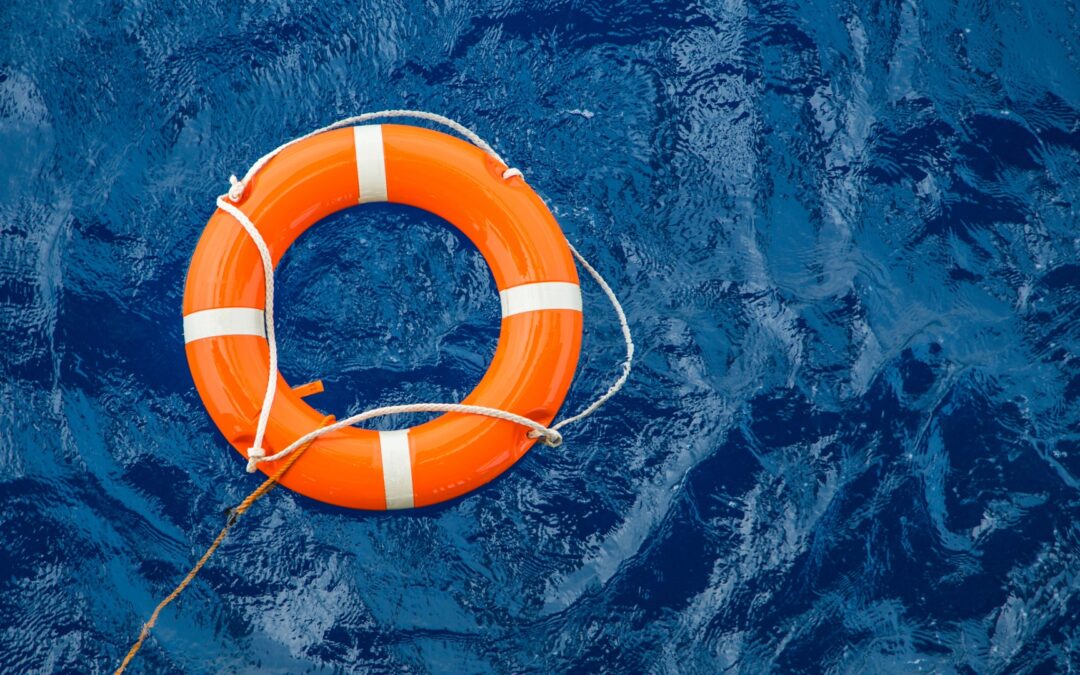
One of the most critical safety incidents in the industry is when people fall overboard. On large trawlers, turning the vessel around and retrieving a person from the water takes time, even when a crew reacts immediately and follows procedures correctly. Even short delays can be critical, as a person in the water is more likely to become exhausted or exposed to marine hazards. Traditional responses, such as throwing a life ring, help with visibility but still leave the person partially submerged and vulnerable.
To address this, Michael has introduced multiple preventative and mitigative controls in his operation. Crew are required to wear inflatable life jackets when weather conditions exceed set limits. He has also invested in a person overboard tracking system that automatically sends a signal to the vessel’s plotting system, allowing crews to locate a person quickly even in poor visibility. These measures aim to reduce response time and prevent confusion during high-stress events. Michael continues to explore further improvements and is actively considering flotation devices that physically lift a person higher out of the water, such as a surf lifesaving ski, to improve survivability while the vessel maneuvers to reach the person overboard.
Michael has also implemented other hazard controls in his operation. Vessel instability and capsize are recognised risks in the fishing industry, particularly in rough weather or during sudden shifts in load. Learning from past industry incidents, he has installed capsize-activated lights in cabins and doorways so crew can orient themselves if the vessel capsizes. He has also modified internal layouts, including installing bi-directional doors in galleys, which allows doors to open under water pressure rather than trapping people inside. These changes are designed to improve survivability in extreme emergencies, where disorientation and stress can make calm decision-making difficult.
Together, these safety controls reflect a practical, experience-based approach. Rather than relying on one solution, Michael has combined multiple controls that account for human
limitations, environmental conditions, and worst-case scenarios. The goal is simple: reduce the likelihood of incidents where possible and significantly improve the chances of survival when prevention alone is not enough.